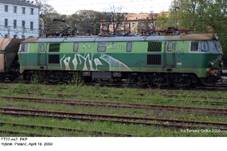
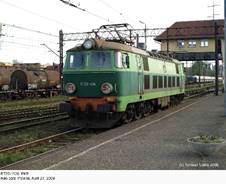
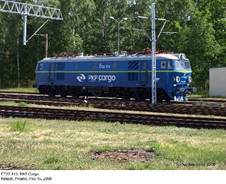
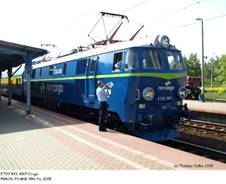
ET22 and EP23
|
|||||||||||||||||||||||||||||||||||||||||||||||||||||||||||||||||||||||||||||||||||||||||||||||||||||||||||||||||||||||||||||||||||||||||||||||||||||||||||||||||||||||||||||||||||||||||
|
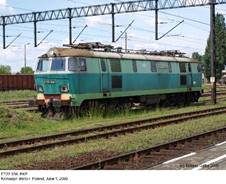
ET22-834, photographed near Łowicz on March 6, 2001.
ET22-211, photographed at the Łuków
station on
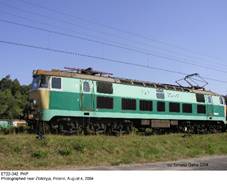
This ET22-342 was photographed near Złotoryja on
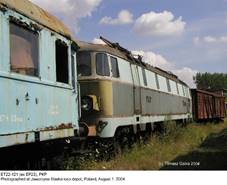
Slightly derelict ET22-121, rebuilt from sole
EP23-001, at Jaworzyna Śląska
heritage park,
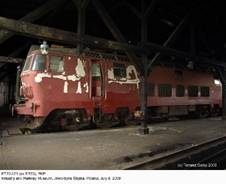
The same locomotive: restoration is under way. July
8, 2009.
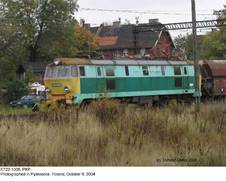
ET22-1006, photographed in Pyskowice
on
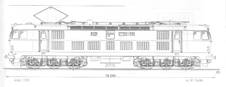
Production ET22; side drawing by M.Ćwikła from SK vol.6/1999.
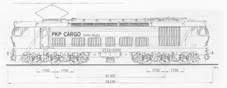
Modernized ET22-2000; side drawing by M.Ćwikła from SK vol.11/2004.
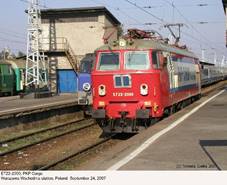
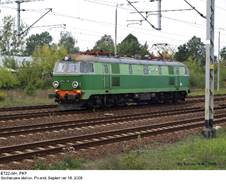
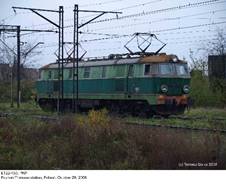
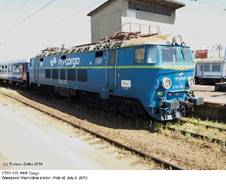
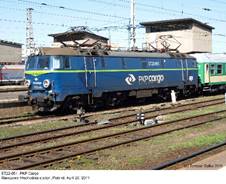
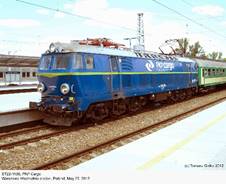
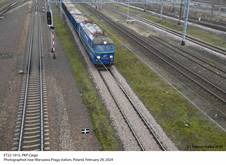
Modernized ET22-2000, photographed at the Warszawa Wschodnia station on
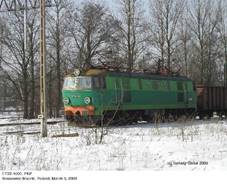
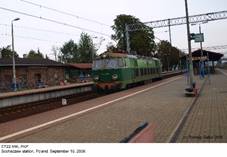
ET22-1000, photographed at the Sosnowiec Maczki station on
This ET22-243 was photographed at the Łódź Olechów depot on
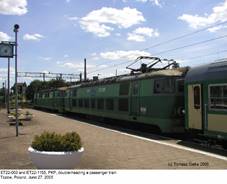
ET22s can often be seen with passenger
trains, but is double-heading really necessary? ET22-003 and ET22-1155 with
P57102 train at Tczew,
Another ET22 with a passenger train:
ET22-877, photographed at Wałbrzych Główny station on
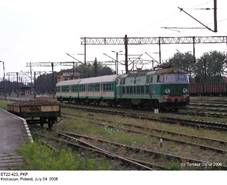
... and yet another: ET22-423, photographed
in Krotoszyn on
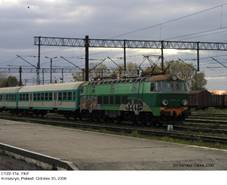
ET22-174, photographed at the same location
on
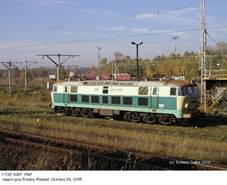
ET22-1067, photographed in Jaworzyna Śląska on
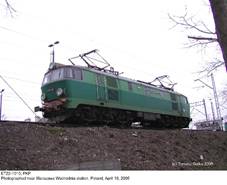
ET22-436, photographed near the Warszawa Wschodnia station on April 10, 2006...
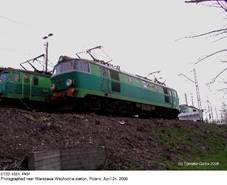
...and ET22-1010, photographed on the same
occasion. Note differences between left and right side cooling louvers.
ET22-1051, photographed at the same location
exactly two weeks later.
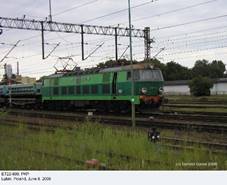
ET22-1118, photographed near the Ostrów Wielkopolski depot on June 7, 2006.
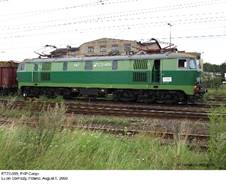
ET22-800, photographed in Lubin
on the next day.
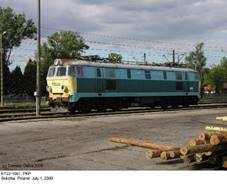
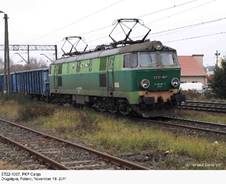
ET22-1007, Sokółka,
July 1, 2006; yellow front and rear body panels were once common.
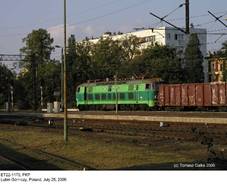
ET22-1170,
Lubin Górniczy, July 25, 2006...
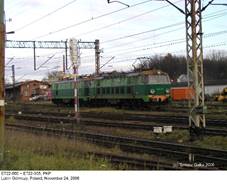
...and ET22-660 with ET22-935, photographed
on the same location on November 24, 2006.
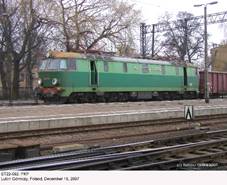
Lubin Górniczy again (I used to visit this
station quite often): ET22-092, December 18, 2007.
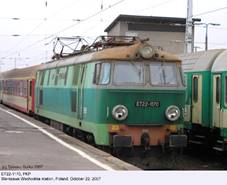
Another picture of the ET22-1170, this time
with a passenger train; Warszawa Wschodnia station,
October 22, 2007.
The same machine, with designation changed to
ET22-R002. Czempiń, May 2, 2008.
ET22-621,
Kraków Prokocim, September 9, 2006.
ET22-749, Zebrzydowice,
October 20, 2006.
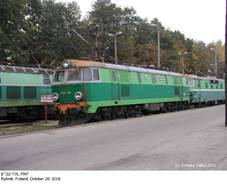
ET22-705, Rybnik, October 20, 2006.
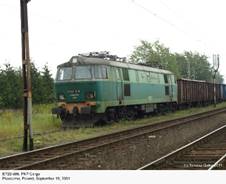
ET22-819, photographed at the Rogów station on November 22, 2006. Several pictures taken in Zduńska
Wola Karsznice between
2007 and 2014 can be found here.
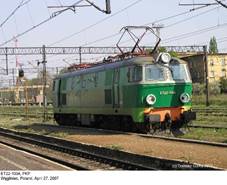
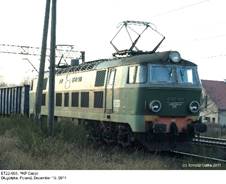
ET22-1004, Węgliniec
station, April 27, 2007.
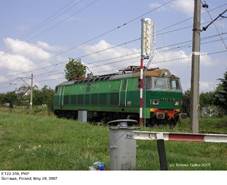
This photo captures an atmosphere: ET22-316
(note three rectangular headlights), photographed near Ścinawa
on May 29, 2007.
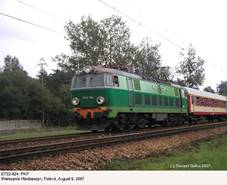
This ET22-824, with a passenger train, was
photographed on August 9, 2007, near Warszawa Miedzeszyn
station – a few hundred metres from my home.
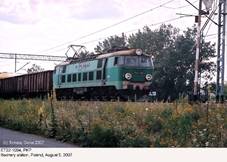
ET22-1094, photographed at Bednary near Łowicz on August
5, 2007.
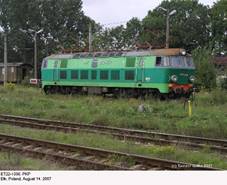
Two ET22s, photographed at the Ełk depot on August 14, 2007: ET22-967...
...and ET22-1036.
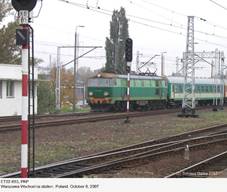
ET22-853, arriving with the P21104 train from
Lublin. Warszawa
Wschodnia station, October
8, 2007.
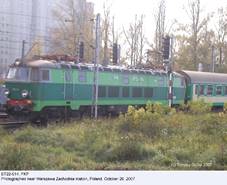
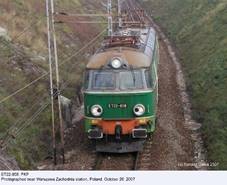
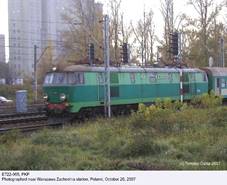
Three ET22s with passenger trains,
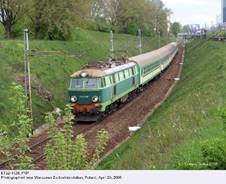
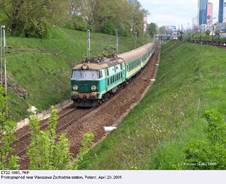
photographed at one of my favorite spots near Warszawa Zachodnia
station on October 26, 2007: ET22-014...
...ET22-808...
...and
ET22-965.
Two more pictures from this location:
ET22-1128...
...and ET22-1093, both taken on April 29,
2008.
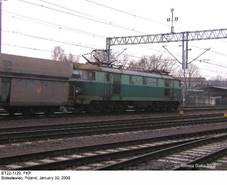
ET22-1129, photographed in Bolesławiec on January 30, 2008.
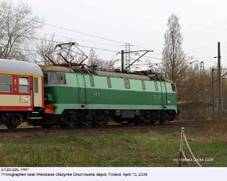
ET22-225, photographed near the Warszawa Olszynka Grochowska depot on
April 10, 2008.
The same engine, photographed near the
Warszawa Miedzeszyn station on August 21, 2008.
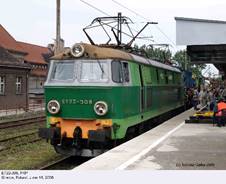
ET22-308, photographed in Gliwice during a
railway stock exhibition on June 15, 2008.
ET22-114, photographed at the Węgliniec depot on July 16, 2008.
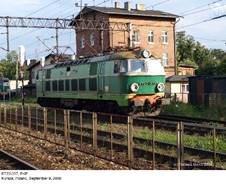
ET22-317, photographed in Korsze
on September 9, 2008…
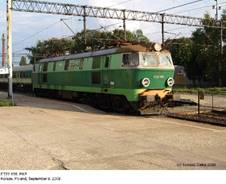
…and ET22-856, photographed on the same
occasion.
Two ET22s, photographed in Sochaczew on September 15, 2008: ET22-886…
…and ET22-984.
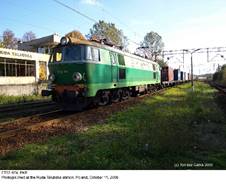
This ET22-974 was photographed at the Ruda Talubska station on
October 11, 2008.
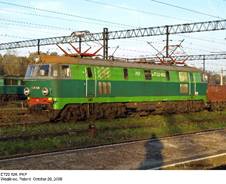
ET22-826, photographed at the Węgliniec station on October 20, 2008. The shade is of
me.
This ET22-430 was spotted at the Poznań Franowo station eight days
later.
ET22-423,
Ostrów Wielkopolski, February 6, 2009.
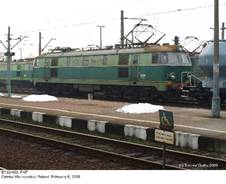
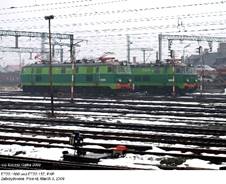
ET22-1000 and ET22-157, posing at the Zebrzydowice station on a cold and misty day of March 3,
2009; note single-arm current collectors.
ET22-796, photographed on the same occasion.
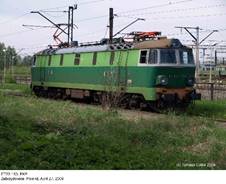
Zebrzydowice again: ET22-153, April 27, 2009.
ET22-442 with traces of ‘artists’ activities;
Rybnik, April 18, 2009.
ET22-1126, Racibórz
station, April 27, 2009.
Two ET22s, photographed in Rzepin on May 15, 2009, display new PKP Cargo
livery: ET22-813…
…and ET22-583, departing with a passenger
train to Poznań.
ET22-939, photographed at the Krotoszyn station on June 1, 2009.
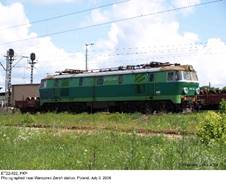
ET22, photographed near the Warszawa Żerań station on July 3, 2009.
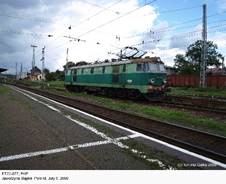
ET22-877,
Jaworzyna Śląska station, July
8, 2009.
ET22-909,
Lubin Górniczy, August 5, 2009.
Two pictures, taken at the Węgliniec depot on the same day: ET22-583…
…and ET22-959.
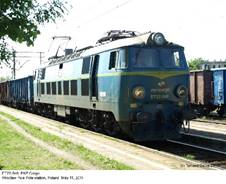
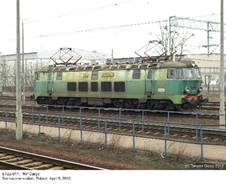
ET22-561, Wrocław Psie Pole station, August 7, 2009.
ET22-398, photographed near Oleśnica on September 25, 2009.
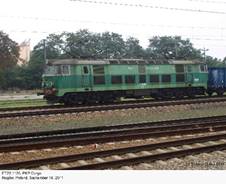
ET22-298 hauls a PKP Przewozy
Regionalne passenger train: Warszawa Wschodnia station, March 19, 2010. This was an interim
measure: EuroSprinter locomotives were later
introduced.
ET22-1135, photographed at the Krotoszyn station on May 21, 2010.
Warszawa
Wschodnia again: ET22-125, photographed
on July 9, 2010...
...and ET22-102, August 18, 2010.
ET22-964 with another ET22 (idle) and a draft
of tank cars; Wrocław Psie
Pole station, August 30, 2010.
Two more pictures taken at this location on
October 4, 2010: ET22-766…
…and ET22-941.
ET22-1087 approaches the Kłodawa
station; September 20, 2010.
Later on the same day, I have just arrived at
the Kutno station by a local train hauled by the
ET22-397.
ET22-768, photographed at the Krotoszyn station on February 18, 2011. The weather was
not very fine and so is the picture…
ET22-051, ready to depart from the Warszawa Wschodnia station with a passenger train: April 20, 2011.
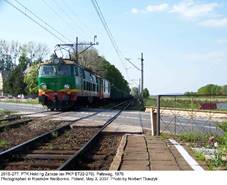
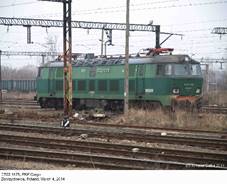
201E-277, PTK Holding Zabrze (ex
ET22-276), photographed in Roszków Raciborski on May3, 2007, by Norbert Tkaczyk (thanks for
permission!). This company was later taken over by DB Schenker.
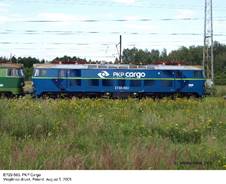
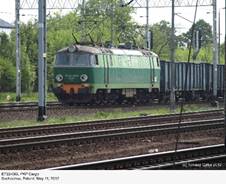
ET22-797, PKP Cargo, photographed at
the Węgliniec depot on March 27, 2011.
ET22-840, photographed at the Wrocław Psie Pole station on
May 11, 2011.
ET22-854, photographed near Dziecinów (Skierniewice-Łuków
line) on May 15, 2011. I tried to frame the wooden privy out, but anyway it
makes such a nice scenic view…
ET22-544,
Warszawa Wschodnia station, May 23, 2011.
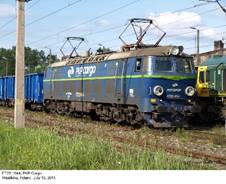
ET22-1044, photographed at the Wasilków station (near Białystok)
on July 16, 2011.
The same locomotive at the Wrocław Psie Pole station, ten
days later.
ET22-986, photographed in Piaseczno
on September 19, 2011.
ET22-1120, photographed in Rogów on the same day.
Four pictures taken at Długołęka
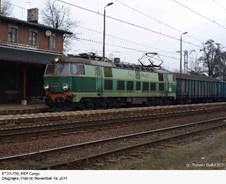
near Wrocław: ET22-1158, November 17, 2011…
…ET22-728, two days later…
…ET22-1097, the same day…
…and ET22-903, exactly one month later.
Back to Długołęka:
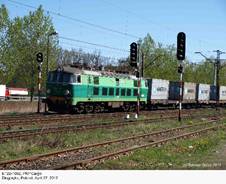
ET22-1052 with a draft of container cars. April 27, 2012.
ET22-017, photographed at the Sochaczew station on April 5, 2012.
Sochaczew again: ET22-063 with an indispensable draft of empty coal cars. May
11, 2012.
ET22-242,
Skarżysko Kamienna station, April
14, 2012.
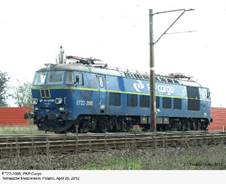
Modernized ET22-2005, photographed in Tomaszów Mazowiecki on April 25, 2012.
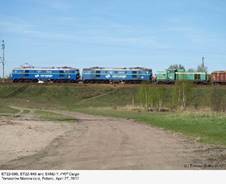
ET22-990, working a freight train together
with the idle ET22-948 and an unknown SM42. Tomaszów Mazowiecki, two
days later.
ET22-1138 with a passenger train,
photographed at the Warszawa Wschodnia station on
May 25, 2012.
ET22-608,
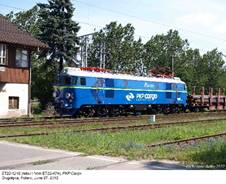
Piotrków Trybunalski, June 17, 2012.
Modernized ET22-1210 (ex ET22-474),
photographed in Długołęka two days later.
ET22-1160, Korsze, September
1, 2012.
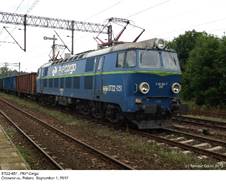
ET22-651, photographed in Czerwonka on the
same day.
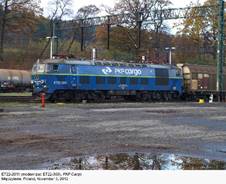
Another modernized locomotive: ET22-2011
(formerly ET22-359), Międzylesie, November 3, 2012.
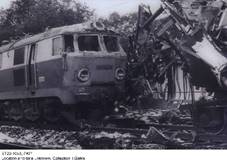
ET22-1053 damaged in a crash in Ursus (outskirts of Warsaw) on August 20, 1990; sixteen
people lost their lives. This locomotive was later repaired and still remains
in service. Photo from my collection.
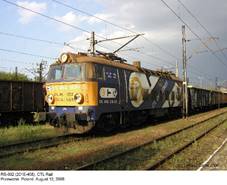
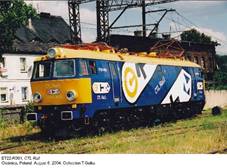
ET22-R001, operated by CTL Rail; Oleśnica, August 6, 2004. Photo from my collection.
Another photo from my collection: ET22-315 in
‘temporary’ PKP Cargo livery, photographed in Strzelce
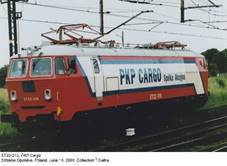
Opolskie on June 14, 2004.
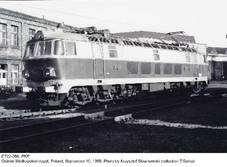
Three older photos by Krzysztof Słowikowski (from my collection): ET22-091, Ostrów Wielkopolski depot, September 10, 1988…
…ET22-088, the same location and date…
…and ET22-019, Kraków,
August 24, 1985.
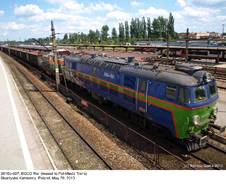
Modernized ex-ONCF 201Eo-007, owned by ECCO Rail and
leased to Pol-Miedź Trans; Skarżysko Kamienna, May 29,
2013.
201Eo-007 has changed hands several times:
now it is owned by Cargounit
and leased to LTG Cargo Polska. Pilawa, March 26,
2025.
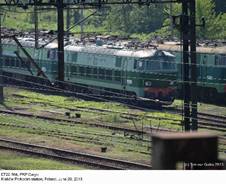
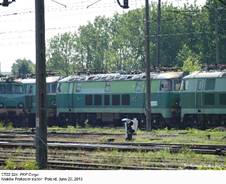
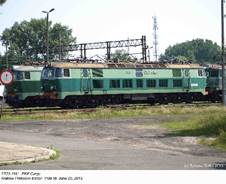
Several pictures taken at the Kraków Prokocim station on June
20, 2013: ET22-879 …
…ET22-304…
…ET22-224…
…and ET22-1181.
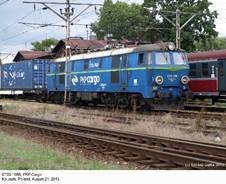
ET22-1088, Koluszki
station, August 21, 2013.
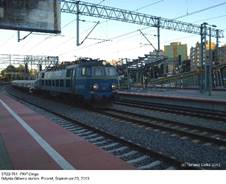
ET22-761 passes through the Gdynia Główna station on September 23, 2013.
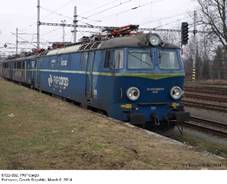
ET22-156, Petrovice,
Czech Republic, March 4, 2014.
ET22-1175, photographed in Zebrzydowice on the same day.
Petrovice again, two days later: ET22-202.
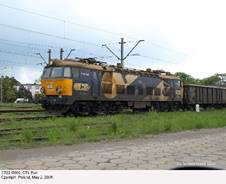
ET22-R003 again, this time photographed in Kędzierzyn-Koźle on March 28, 2014.
ET22-815 from the PKP Cargo fleet, photographed near Bąkowiec
on August 24, 2014.
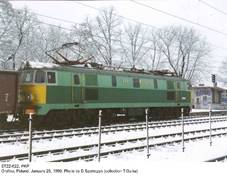
ET22-622, photographed in Gryfino
on January 28, 1999. Photo by D. Szymczyk (from my
collection).
ET22-1182, Gliwice station, March 26, 2015.
ET22-162,
PKP Cargo, Korsze, July 2, 2015.
ET22-157,
PKP Cargo, Ostrołęka, August 2,
2015.
ET22-057, Kłodzko Główne, April 12, 1997. Photo by Marek Niemiec (from my collection). This locomotive was
withdrawn and scrapped in January 2001.
Five pictures taken in Zebrzydowice
on March 10, 2017: ET22-1170…
… ET22-157…
… ET22-709…
… ET22-108…
… and modernized ET22-1207 (ex ET22-526). All
are from the PKP Cargo fleet.
This ET22-102, also from PKP Cargo, was photographed on the same day in Petrovice, Czech Republic.
Two ET22s from the PKP Cargo fleet, photographed in Ostrołęka
on April 8, 2017: ET22-1021…
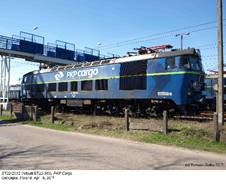
…and modernized ET22-2032 (ex ET22-319).
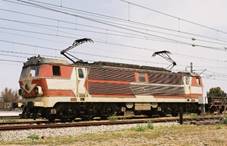
Moroccan E1006, photographed
in SidiYaya du Dharm on
April 6, 2005. In 2012 this locomotive was brought back to Poland and
currently is operated by Rail Polska as 201Eo-006. Photo by Jean-Pierre Vergez-Larrouy (www.commons.wikimedia.org).
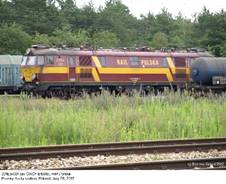
201Eo-001 from the Rail Polska fleet is ex-Moroccan E1008;
photo taken at the Puławy Azoty
station on July 28, 2017. More photos from this location can be found here. Another good place to spot an ET22 is
Warszawa Praga station. Pictures from this location
can be found here.
ET22-1170 from the PKP Cargo fleet, photographed in Dęblin
on January 26, 2018.
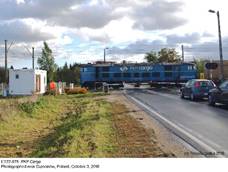
ET22-975, PKP
Cargo, photographed near Dziecinów on October
3, 2018.
ET22-989, PKP
Cargo, Opalenica, October 19, 2018.
Two pictures taken on February 15, 2020, near
Warszawa Okęcie station: ET22-1161 (PKP Cargo)…
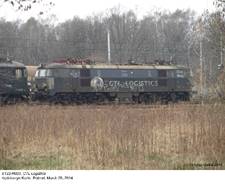
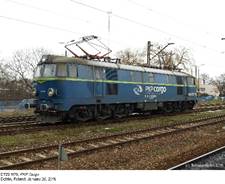
… and ET22-R003, CTL Logistics (ex ONCF
E1021).
ET22-1087, PKP Cargo, photographed near Warszawa Żerań
station on July 6, 2023.
Two pictures taken in Pilawa
on July 4, 2024: ET22-707, PKP Cargo…
… and ET22-1014, the same operator.
ET22-662, the same location, August 1, 2024.
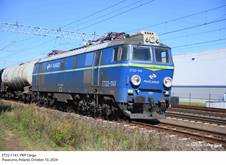
ET22-1141, PKP Cargo, Piaseczno, October 10, 2024.
Pilawa again: ET22-947, PKP Cargo,
March 26, 2025.
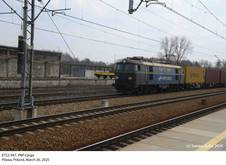
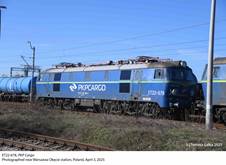
Two pictures taken near Warszawa Okęcie station on April 3, 2025: ET22-678…
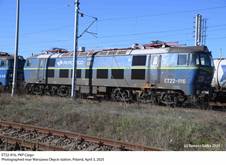
… and ET22-916, both from the PKP Cargo fleet. |
Heavy drafts have always been typical for Polish
freight traffic; no wonder, thus, that first indigenous electric freight locomotive,
ET21 (726 examples built between 1957 and 1971), with continuous rating of
2040 kW, soon became too weak. Double-heading was certainly not an economical
solution and, with rapid progress of electrification, more powerful
freighters were obviously necessary. ET21, based to a certain extent on
Soviet VL22M of early 1940s, was a simple and straightforward
machine with little – if any – potential of further development. Six-axle
EU20, supplied from Eastern Germany, was neither reliable nor particularly
modern. Specification for a new freight locomotive was submitted in 1966,
initially with an intention to produce a universal machine with maximum speed
of 125 km/h, suitable also for heavy passenger trains – hence proposed class
designation EU22 (factory type 7E, later changed to 201E). New locomotive
owed much to British-built EU06 and its later Polish license variant EU07. In
particular, traction motors were of the same type, as well as their
suspension and many other items of equipment. First prototype from Pafawag
factory of Wrocław, finally designated ET22-001,
was rolled out in November 1969 and tests began in December, ET22-002 joining
next February. Results were basically satisfactory and next ten machines were
delivered in 1971. New locomotive, compared to ET21, offered almost 50%
increase of rated power and tractive effort, and was soon accepted for mass
production. Between 1971 and 1989, 1207 examples were supplied, which makes
ET22 the most numerous electric locomotive type ever built in Poland and in
fact also in Europe. First ET22s were soon found prone to derailing, so from
ET22-122 onwards connection between trucks and body was redesigned (which
also resulted in reduced vibration and improved crew comfort). This
modification was between 1994 and 1996 retroactively introduced in 27 earlier
examples that still remained in service. Last machine with earlier suspension
variant in active service was ET22-101, written off in 2007 and scrapped in
2009. Although considered a universal locomotive at the
design stage, type 201E finally emerged as a freight machine, mainly due to PKP priorities. Type 201Ea, delivered
in March 1973, was an attempt to develop ET22 into a fast – at least for that
time – passenger locomotive (maximum speed 140 km/h). Reduction gear ratio
was changed from 79:18 to 73:22, but running qualities left much to be
desired and after prolonged tests the idea was abandoned. The sole example,
designated EP23-001, was converted in 1979 to the ET22 standard and
designated ET22-121 (this service number was used for the second time, the
first ET22-121 being written off two years earlier). 201Ed (later
re-designated 103E), with the same reduction gear, LKa535 traction motors,
modified trucks and maximum speed 160 km/h, never left the drawing board.
During 1974, several modifications were introduced, mainly in suspension, in
order to improve running qualities, but type designation remained unchanged.
201Eg, built in 1975, was the export variant for Moroccan state railways ONCF, with redesigned body (different
vehicle gauge), LKa535 traction motors and many minor modifications. 23
examples, supplied between 1975 and 1976, were classed 1000 by ONCF and given service numbers from
E-1001 onwards. 201Ec of 1977 featured multiplied control, further truck and
suspension modifications and various minor improvements. It was initially
intended to standardize this variant, but the idea was abandoned and only two
examples were built, with service numbers ET22-501 and ET22-502 (later
ET22-701 and ET22-702, finally ET22-1001 and ET22-1002). Many other minor
modifications were introduced during production and individual batches
differed externally in shape and location of side windows, air inlets and
vents. Type designation, however, was not changed and apart from
above-mentioned examples all ET22s built until 1987 were delivered as type
201E. For some unknown reason, later ET22s were designated type 201Eh,
although in fact no modification justified this change! Due to decrease of freight traffic and lack of passenger
locomotives, ET22s are quite often used with passenger trains; their running
qualities in this role are, however, far from satisfactory. In fact, running
qualities have never been the strong side of ET22 and older ET21 was even
considered superior in mountain regions. In early 1970s preliminary specification was drawn
up for a 6000 kW Co’Co’ electric locomotive, to be
built in several variants, of which the fastest was to attain 200 km/h. Plans
to build 720 such machines until 1985 proved sadly over-optimistic. New
machine failed to materialize even in a prototype form and thus ET22,
commonly nicknamed ‘Byk’ (Bull), is still the basic
electric freight locomotive in PKP
service. According to rosters quoted in SK, their number reached its
peak in 1991: on January 1 PKP had
1171 examples. During next six years they dwindled to 1153 and on January 1,
1999, PKP had 1024 ET22s (of 1184
delivered). This type is also used by other operators (some examples having
been purchased via scrap-disposal companies!). In mid-2006, CTL holding had seven ex-PKP machines; as state railways were
not eager to sell further locomotives to the potential competitor, three
examples withdrawn from ONCF
service (E-1003, E-1018 and E-1021) had been purchased in 2003. Two more
ex-Moroccan machines were intended to follow in 2004, but this finally failed
to materialize. In January 2012, however, further eight ex-ONCF
locomotives arrived in Poland by sea from Casablanca and were brought to the Oleśnica repair works. They were thoroughly overhauled
and modernized to the 201Eo standard (modified crew compartment with
air-conditioning, single-arm current collectors and several minor
improvements). Six were sold to Rail Polska
and two to PHU Lokomotiv. Until March 2015
further six ex-PKP ET22s were
modernized to this standard and sold to various private operators. Moreover,
201E-277 (ex-PKP) was used by Kuźnica Warężyńska
sand mine and finally went to DB Schenker Rail Polska in April 2010. Private operators don’t use any
consistent designation system, so their machines are designated as ET22 or
201E plus service number (usually serial, but sometimes an alphanumerical
designation, e.g. CTL ET22-R004 is
ex-PKP ET22-791). Basic ET22 design goes back to the 1960s and further
modifications – apart from trucks and suspension – were generally restricted
to details. Plans from late 1990s stipulated that about 50 locomotives of
this type should be modernized by 2000, with options for further 300 between
2001 and 2005 and 200 between 2006 and 2010. It was intended to fit new ac
traction motors in completely new trucks and modify the suspension, which had
never been a strong side of the basic design. These plans had to be cut down
substantially and first major modernization was undertaken only in 2002. The
first modernized machine, designated type 201Em, with service number
ET22-2000 (ex ET22-315), was rolled out in June 2004. Main effort was
concentrated at improving running qualities, so trucks and suspension were
thoroughly redesigned. Electric equipment and control systems were also
modified, although traction motors remained unchanged. Control panel was
completely redesigned. Externally – apart from minor differences, new livery
and out-of-sequence service number – the modernized machine was easily identified
by different headlights and rectangular air intakes to air conditioning
installation, the latter being fitted for the first time. Service tests began
in August 2004 and results were considered satisfactory, but next step came
only in 2007, when a decision was taken to bring up further 49 ET22s to this
standard during next two years. A contract for modernization of four examples
was signed with ZNLE (Electric Locomotive Repair Works) of Gliwice in
September and first two of these, ET22-427 and ET22-569, were delivered in
2008. Due to financial restrictions the number of 201Ems was finally cut down
to 28 examples and the entire batch was completed in mid-2010. Of the
remaining 22 ET22s, twenty were finally modernized to the 201Ek standard,
wherein old trucks and suspension have been retained. Modernized locomotives
were given new service numbers, from ET22-2000 onwards, and the last one,
ET22-2047 (ex ET44-488), was outshopped in January
2011. Yet another modernization version, more ‘modest’
compared to two above-mentioned ones, was proposed in 2011. Designated 201El,
it is restricted mainly to electrical equipment, air conditioning units and
driver’s cab details. It was introduced during major overhauls at the ZNLE
Gliwice and first batch numbered seventeen examples. They were given new
service numbers, from ET22-1201 onwards. First of 201Els (ET22-1201, ex
ET22-688) was completed in January 2012 and the last one, ET22-1217 (ex
ET22-593) was outshopped in September 2012. All
were assigned to the Katowice regional management. Until now (mid-2022) no
more modernizations followed. In 2013 three withdrawn locomotives (ET22-133, -286 and -335) were purchased by Pol-Trans of Dębica and restored in service. They were re-numbered ET22-1034-5151, ET22-1034-5281 and ET22-1034-5331, respectively; 1034 identifies their current owner, while origin of service numbers is unknown to me. The first one has had its ‘1034’ painted over, while remaining two had these digits removed from designations in June 2020. They were, at various periods, leased to Koleje Czeskie, ČD Cargo Poland and Lotos Kolej. Many Polish locomotives of unquestionable historical
value have been scrapped, so it is certainly worth mentioning that ET22-121
(ex EP23-001) has been saved. After withdrawal, it somehow managed to find
its way to the rolling stock heritage park in Jaworzyna
Śląska (now Industry and Railway Museum),
where it can now be seen. Its condition is far from perfect, but –
considering the attitude of its present owners – things should soon improve.
According to recent information, this locomotive is intended for restoration
in near future, providing that adequate funds are available. Main
technical data – ET22
1)
Multiplied in ET22-1001 and 1002 2)
One example rebuilt from EP23-001 (ET22-121 –
service number used for the second time) 3)
LKa535 engines in Moroccan examples (type 201Eg) Main
technical data – EP23
1) Later converted into ET22-121 References and acknowledgments
-
Monographic articles by Paweł
Terczyński (SK vol. 8/2006 and 1/2007); -
Article on the ET22-2000 modification by the same
author (SK vol. 11/2004); -
AL; -
SK, various issues; -
www.kolejowaklatka.org (website
by Marek Dąbrowski). |
||||||||||||||||||||||||||||||||||||||||||||||||||||||||||||||||||||||||||||||||||||||||||||||||||||||||||||||||||||||||||||||||||||||||||||||||||||||||||||||||||||||||||||||||||||||||