Ok55
|
|||||||||||||||||||||||||||||||||||||||||||||||||||||||||||||||||||||||||||||||||||||||||||||||||||||||||||||||||||||||||||||
|
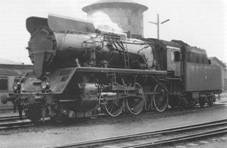
Unfortunately, I have never had an occasion
to take a picture of an Ok55 – and I will never have one. This photo of
Ok55-3 by COBiRTK has been taken
from SK vol.12/2000.
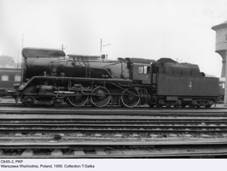
According to my data, this picture of the Ok55-3
was taken at the Warszawa Wschodnia station in 1959. Most probably it was
taken on the same occasion as the one above. Photo from my collection.
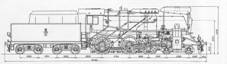
Side drawing of the Ok55-3 in its initial form from
PNP.
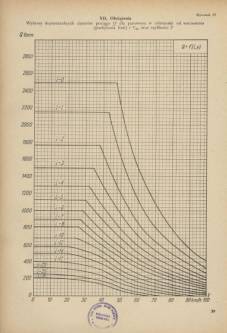
Load diagram of the Ok55 (still designated Ok203),
from tests performed in 1953 (a copy of the original report from my
collection). A curious detail: the stamp at the page bottom reads ‘Regional
State Railway Management in Stalinogród’. Stalinogród was the name of
Katowice between March 1953 and December 1956. |
American S-160 Consolidation freight locomotives formed an important part of the PKP inventory immediately after WWII. 75 machines of this class, designated Tr201, were supplied by UNRRA and further 500 (Tr203) were purchased from USATC stocks. In view of motive power shortages in this period, their importance cannot be underestimated; they were not, however, trouble-free. Running qualities left quite much to be desired, but boiler design was modern by current European standards and overall boiler efficiency was high. Due to comparatively high failure rate and mounting supplies of heavier freight locomotives, in early 50s they were being shifted to switching or withdrawn and kept in reserve. At
the same time, PKP had considerable
number of Ok1 (Prussian P8) and Ok22 (its direct derivative) passenger
locomotives, characterized by excellent running qualities, but obsolete and
not entirely satisfactory boiler design, as well as low steam pressure of
only 12 bar. In particular, Ok22 engines were comparatively new, but their
efficiency was rather low by current standards. As shortages of passenger
locomotives were particularly acute, and a few wrecked Ok22s were at hand, a
decision was taken to marry an Ok22 undercarriage with a Tr203 boiler and
thus obtain a ‘new’ engine that would combine good running qualities with a
modern and efficient boiler. Between
1952 and 1953, ZNTK (Railway Stock
Repair Works) of Piła installed the boiler taken from the Tr203-167 (Lima 8452/1943) on the frame of a
wrecked Ok22. 22D23 tender, usually coupled with Ok22s, was soon supplanted
by 32D2 (ex-German 2’2’T31,5) with much larger water-box. The resultant
hybrid was designated Ok203-1 and underwent tests between August 15 and
December 30, 1953. First results were not entirely satisfactory, as steam
production was found insufficient. After smoke stack lengthening by 200 mm
and some minor modification of the smoke-box a considerable improvement was
achieved. According to the official report from tests (of which I have a
copy), maximum tractive effort was 12.8 tonnes and the engine proved capable
of hauling a 2490-tonne draft at 48 km/h. The second example, Ok203-2, with
boiler taken from ALCO 70964/1943,
followed in 1955. Some sources claim that these two frames had previously
belonged to Ok22-35 and Ok22-45, actually written off a few years later, but
this question in fact remains open, as there were some wrecked Ok22s that had
no service numbers allocated after WWII and were left for cannibalization.
Old boilers were later fitted to Ok22-57 and Ok22-67. It should be also said
that the Ok203 designation just reflected the origin of these machines and
did not comply with relevant PKP
standards. Most radical concepts envisaged similar utilization of all available Tr201s and Tr203s, but in such case comparatively new undercarriages and tenders of American locomotives would find no use and probably end up as scrap after only a few years’ service. It was thus decided to convert Tr203 undercarriages into universal tank locomotives, designated TKr55, while their boilers and tenders would find their use in modified passenger locomotives, now more appropriately designated Ok55. In order to test this concept, an order was placed in ZNTK (Railway Stock Repair Works) of Wrocław in October 1958 for one machine, namely Ok55-3 (Ok203-1 and Ok203-2 had been re-designated Ok55-1 and Ok55-2, respectively). In fact this was a new locomotive that utilized neither Ok22 frame and wheelsets nor Tr203 boiler. There were substantial modifications; among them, welding was widely introduced instead of riveting. In particular, boiler was of entirely welded construction and featured also increased number of smoke tubes, new superheater and air heater in the smoke-box, easily seen in front view and very characteristic for this particular engine. Wide introduction of roller bearings was another noteworthy feature, and external frame of the lead truck was a novelty in Polish locomotive design. The machine was fitted with a modified 25D203 tender of American origin, re-designated 30D55. After brief and entirely successful tests, Ok55-3 was accepted by PKP in May 1959. Operational experience was encouraging and it was planned to build further machines, utilizing modernized Tr203 boilers. These plans, however, never materialized. Both HCP and Fablok had already said definite farewell to steam locomotives, while repair works had no capabilities to start large-scale production. Thus Ok55-3 was in fact the very last steam locomotive built for PKP (although it was neither the last one accepted by this service nor the last one built in Poland!). This engine after its first major repair re-appeared in 1965 in a form much different from the original one. In particular, it featured an Ok22 undercarriage and driver’s cab and the characteristic air heater was missing. The reasons for these changes are not clear; frame fatigue has been pointed out as the possible main reason. Anyway, all three Ok55s had now much in common with Ok22s (except for boilers) and in October 1970 were impressed into this class, becoming Ok22-89, 90 and 91. They were written off between 1976 and 1978, which means that their service was quite short. Unfortunately, all three were scrapped. Brief history of the Ok55 class reflects the railway authorities attitude: obsessed with rapid introduction of electric and diesel locomotives, irrespective of costs, they had completely neglected steam machines that, due to inevitable problems and delays, remained in service for much longer than expected – even into times when they were considered a unique curiosity, at least by European standards. Main technical data
1)
Data in brackets for Ok55-3 2)
Some sources give 63.0 3)
With 32D2 tender 4)
In 1970 impressed into class Ok22 with service
numbers 89, 90 and 91. References
and acknowledgments
- Monographic article by Paweł Terczyński (SK
vol. 12/2000).
|
||||||||||||||||||||||||||||||||||||||||||||||||||||||||||||||||||||||||||||||||||||||||||||||||||||||||||||||||||||||||||||